Low-Pressure Toilets
Smart Toilets for Low Water Pressure: Requirements, Flush Designs, and Tests
Learn how static pressure, dynamic pressure, and flow affect smart toilets, how low-pressure flush designs differ, and what to check before installation.
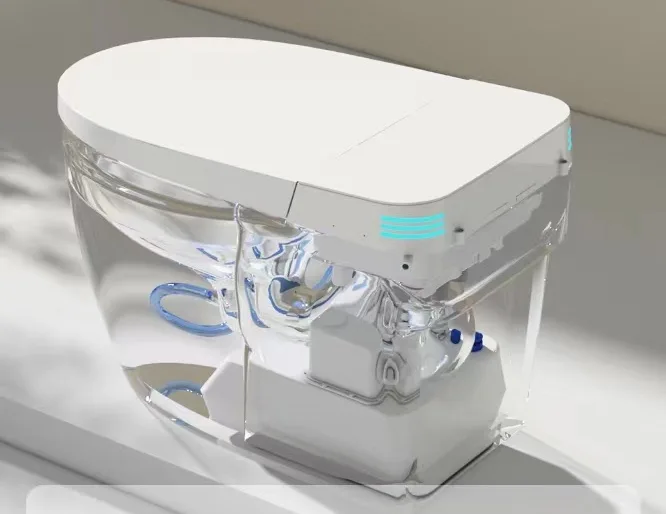
Can a smart toilet work with low water pressure?
Yes, but the answer depends on the flush architecture and the actual pressure and flow available while water is moving. A direct-feed smart toilet may need the building supply to deliver a short burst of flow. A stored-water or pump-assisted model can fill between uses and release that water more independently when the flush starts.
Low pressure is therefore not solved by a label alone. The bowl, waterway, valves, storage volume, pump, refill logic, pipe restrictions, and installation conditions all determine whether a particular toilet will work reliably.
Static pressure, dynamic pressure, and flow are different
Static pressure is measured while no water is flowing. It is useful, but it can hide restrictions. Dynamic pressure is the pressure that remains while the fixture is drawing water. Flow rate describes how much water the pipe can actually deliver over time.
A narrow hose, clogged filter, partly closed valve, long pipe run, or simultaneous demand can produce a reasonable static reading but poor dynamic pressure and flow. That is why a universal table based only on one pressure number is misleading.
Common signs of a supply problem
Possible symptoms include an incomplete flush, inconsistent bowl coverage, long refill time, repeated fill attempts, a supply fault, or good performance at quiet hours but poor performance during peak demand. These symptoms can also come from scale, a blocked filter, an incorrect valve, air in the line, software state, or the ceramic waterway, so diagnosis should follow the water path rather than assume the building is always at fault.
How to check the installation
Before buying or troubleshooting:
- Identify the model's published inlet-pressure and flow requirements.
- Confirm the shutoff valve is fully open and the hose and filter are not restricted.
- Measure static pressure at the intended connection.
- Measure pressure and flow while water is being drawn at a realistic rate.
- Repeat during the time when the problem normally occurs.
- Compare the measured condition with the exact model manual, not a generic “smart toilet” value.
Where the building uses a roof tank, gravity feed, shared riser, pressure-reducing valve, or booster system, the plumbing design may explain larger changes between floors or times of day.
Why direct-feed toilets are pressure-sensitive
In a direct-feed system, the supply line is an active part of the flush. When the valve opens, the building has to provide enough water through the inlet, hose, valve, internal channels, and ceramic within the designed time. A pressure drop or restriction immediately reduces the available hydraulic energy.
This can work well in a stable installation, but it makes the product more sensitive to conditions outside the toilet. A datasheet minimum should therefore be validated at the connection point and under flow.
How stored water and a pump change the problem
A stored-water design fills an internal chamber before the flush is needed. The product can then release a known charge over a shorter period. If a pump is used, it can drive that stored water through a designed path rather than relying only on momentary building pressure.
This reduces—but does not eliminate—dependence on the supply. The chamber still needs enough incoming water to refill. The product also needs correct water-level detection, overflow protection, refill-time handling, pump control, and a waterway matched to the bowl.
What “zero-pressure flushing” really means
The term normally describes the ability to use water already stored inside the toilet when supply pressure is unavailable or very low at the moment of flushing. It should not be read as “the toilet works indefinitely without a water supply.”
Ask four questions whenever the term appears:
- How much water must already be stored?
- Can the flush be triggered without mains power?
- How is the chamber refilled, and what minimum condition is required?
- What happens after the stored charge has been used?
Without these answers, “zero pressure” is not a complete installation specification.
How to test a low-pressure smart toilet
A reproducible test controls the supply rather than merely observing a household tap. Record the pipe and hose arrangement, static and dynamic pressure, flow, voltage, water temperature, starting water level, ceramic and software version. Then test low, nominal, and high conditions, including refill and consecutive cycles.
Evaluate bowl cleaning, waste transport, residual water level, leakage, fill completion, refill duration, abnormal noise, and fault recovery. If a test file states a minimum threshold, that is the intended acceptance condition; only a completed test record under that condition supports a pass claim.
Choosing a toilet for a low-pressure site
Prefer a model whose manual publishes conditions that can be checked locally. If dynamic pressure or flow falls below the stated requirement, consider a model with internal storage, an approved plumbing correction, or a properly designed booster solution. A booster should not be added casually: local plumbing rules, maximum pressure, noise, water hammer, and other fixtures still matter.
The safest decision combines a site measurement with the exact toilet's documented requirements and service support.
Frequently asked questions
Do upper floors always have low water pressure?
No. Building height is only one factor. Pumps, pressure zones, pipe condition, demand, and control valves determine the actual pressure at the fixture.
Can a booster pump solve every smart-toilet problem?
No. It cannot fix a clogged filter, undersized internal waterway, incorrect ceramic match, faulty valve, or software issue, and it must comply with the plumbing system design.
Can a zero-pressure toilet refill with no incoming water?
No. Stored water may support a flush, but the product needs incoming water before it can restore that charge.
Is static pressure enough to choose a toilet?
No. Measure the usable flow and pressure while water is moving, especially under peak-demand conditions.