Smart Toilet Guide
What Is a Smart Toilet? How It Works, Features, Flushing, and Buying Tips
Learn how smart toilets work, including flushing, washing, heating, sensors, safety, installation requirements, maintenance, and buying considerations.
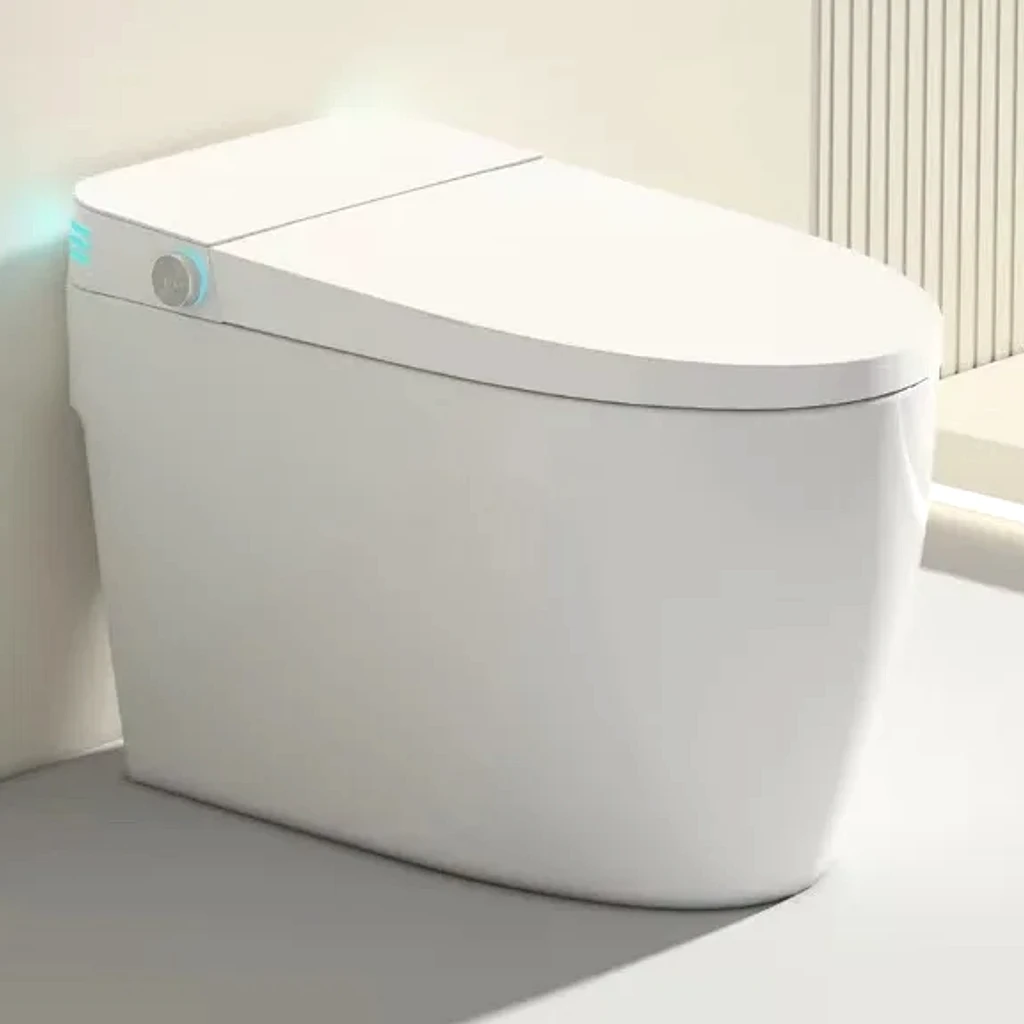
What is a smart toilet?
A smart toilet combines a ceramic toilet with electronically controlled functions such as bidet washing, seat heating, warm-air drying, automatic flushing, sensing, deodorization, or night lighting. The exact feature set varies, but every integrated model has to coordinate water, electricity, moving parts, user controls, and safety protections inside a wet environment.
That makes it different from a conventional toilet and from a bidet seat fitted to an existing bowl. A bidet seat adds washing and comfort features while relying on the original toilet for flushing. An integrated smart toilet is designed as one system: bowl, flush waterway, wash module, valves, heaters, sensors, controller, power supply, and service access all affect the result.
How does a smart toilet work?
Most smart toilets follow a simple sequence even though the internal design can be complex:
- Sensors detect occupancy, approach, departure, or a user command.
- The controller checks the current state and any safety conditions.
- Valves, pumps, heaters, motors, and lights perform the requested function.
- Sensors and status feedback confirm temperature, position, water state, or faults.
- The product returns to a safe standby state after the cycle ends.
Firmware and electronics define that sequence, but code alone does not prove comfort, flushing strength, or reliability. Those outcomes also depend on the ceramic geometry, water path, inlet conditions, heater capacity, sensor placement, mechanical tolerances, and test method.
The main systems inside a smart toilet
Flushing system
The flush may use building pressure directly, water stored inside the product, an onboard pump, or a combination of these. The right architecture depends on local pressure and flow, the bowl and trapway, available space, noise expectations, and what should happen during a power or water interruption. Our separate smart toilet flushing system guide explains these options in detail.
Washing and heating system
The wash module controls nozzle movement, water flow, temperature, and cleaning. Models may heat wash water on demand or use a small reservoir. Seat and air heaters are separate loads, so warm-water claims do not describe the entire product's electrical demand.
Sensors and user controls
Seat sensors, proximity sensors, water-temperature sensors, position feedback, buttons, knobs, remotes, and sometimes foot sensors translate user actions into controlled states. A good interface prevents accidental activation and makes exceptional states—such as no water, overheating, or a blocked mechanism—understandable.
Electrical and safety protection
A smart toilet operates near water, so insulation, grounding, leakage protection, thermal cutoffs, waterproofing, component spacing, and safe failure behavior matter. The applicable requirements depend on the product configuration and destination market; a logo on a component does not automatically establish compliance for the complete toilet.
How smart-toilet flushing differs by architecture
A direct-feed design draws flush energy from the supply line. It can be compact, but the result is more sensitive to dynamic pressure, available flow, pipe restrictions, and simultaneous water use elsewhere in the building.
A built-in storage design fills between flushes and releases stored water when needed. A pump-assisted version can control the discharge more independently of momentary supply pressure, although it adds components, sound, power demand, refill time, and service requirements. “Zero-pressure flush” usually means a stored charge can complete a flush when supply pressure is unavailable at that moment; it does not mean the tank can refill without incoming water.
See smart toilets for low water pressure if pressure is your main concern, or compare tankless and built-in-tank designs.
What to check before installation
Before choosing a model, confirm:
- the available electrical outlet, voltage, grounding, and local wet-area rules;
- the shutoff valve, pipe size, static pressure, dynamic pressure, and usable flow;
- the rough-in distance, waste outlet, bowl dimensions, and door clearance;
- whether the model can flush during a power outage and under what conditions;
- access for filter cleaning, descaling, nozzle service, and replacement parts;
- the certifications or approvals required in the installation market.
Static pressure alone is not enough. A gauge may show acceptable pressure with no water moving while the pressure collapses during a flush. Where supply is uncertain, measure pressure and flow under a realistic demand condition.
Cleaning and maintenance
Routine care should include cleaning the bowl and nozzle with compatible products, checking the inlet filter, managing scale where water is hard, and keeping sensor areas clean. Abrasive cleaners or chemicals that attack plastics, seals, coatings, or the wash system can shorten service life.
Integrated toilets also benefit from accessible modules. A long feature list matters less if a filter, pump, heater, nozzle, or control module cannot be inspected or replaced without removing the entire product.
How to choose a smart toilet
Start with the installation, not the feature list. Stable supply pressure and a nearby compliant outlet allow more options. Low-pressure or gravity-fed systems may favor stored-water flushing. Hard water increases the importance of filtration, scale management, and serviceable waterways. Households that value simple maintenance may prefer fewer motorized functions and readily available spare parts.
Then compare the functions you will actually use: wash adjustment, seat comfort, drying, automatic lid or flush, night lighting, deodorization, child settings, and remote controls. Ask for the conditions behind performance claims, the warranty scope, and the service path—not just the number of functions.
Frequently asked questions
Does a smart toilet need electricity?
Most integrated smart toilets need electricity for washing, heating, sensing, pumps, or controls. Some retain a manual or backup flush function, but the behavior is model-specific.
Can a smart toilet flush during a power outage?
Some can use a mechanical control, backup battery, or stored water. Others cannot operate normally. Check the product manual for the exact outage sequence.
Is a smart toilet the same as a bidet seat?
No. A bidet seat adds washing features to an existing toilet. An integrated smart toilet combines the bowl, flushing system, wash functions, sensors, and controls in one product.
Can a smart toilet work with low water pressure?
Yes, if its flushing architecture is designed for the available pressure and flow. Stored-water and pump-assisted systems can reduce dependence on momentary supply pressure, but they still need incoming water to refill.
Are more features always better?
No. The better choice is the product whose useful functions, installation requirements, safety documentation, cleaning needs, and service support match the home where it will be used.