Easy-Clean Floor Drain
How an Easy-Clean Floor Drain Works: Odor Control, Drainage, and Removable Design
Learn how removable floor-drain structures combine odor control, insect protection, drainage, and cleaning, with CN110629859B as an engineering case study.
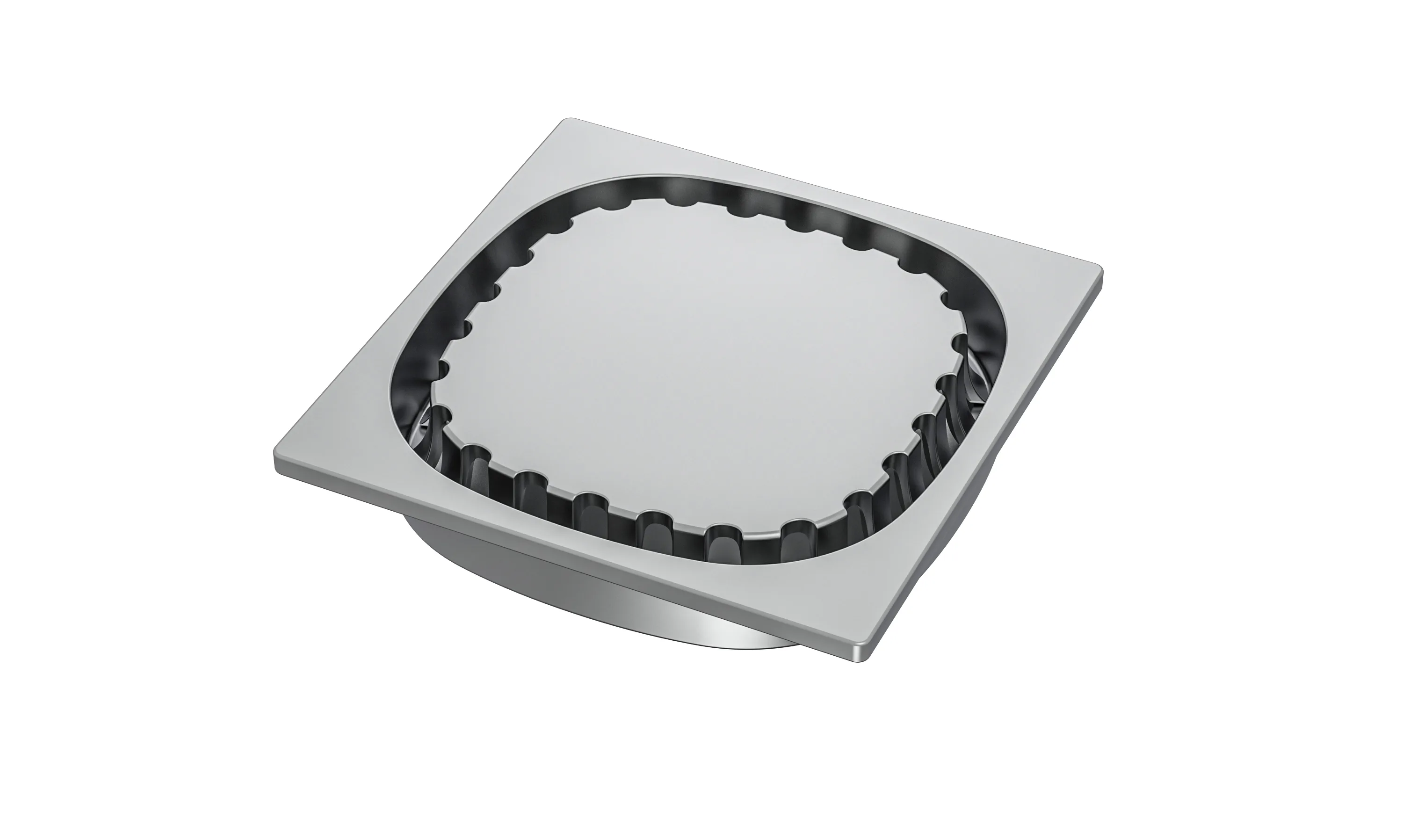
What makes a floor drain easy to clean?
An easy-clean floor drain lets the user reach and remove the parts where hair, soap residue, sediment, and sludge collect. It still has to drain water, limit sewer odor and insect entry, fit the pipe and floor build-up, and return to the correct sealed state after cleaning.
Those requirements pull in different directions. A narrow or complex path may improve one type of sealing but trap debris. A large open path may drain quickly but offer little protection when no water is moving. A removable insert helps only if it can be lifted without special tools, cleaned fully, and reinstalled without damaging or misaligning the seal.
Why floor drains develop odor and blockages
Odor can return when the barrier between the room and the waste pipe is missing, dry, dirty, damaged, or unable to close. Hair and residue collect at grates, narrow transitions, hinges, springs, and inaccessible chambers. Scale or construction debris can also prevent a moving seal from returning to its intended position.
Drainage speed is affected by more than the visible grate. The opening area, internal cross-section, turns, sealing element, outlet diameter, pipe fall, downstream capacity, and air movement all matter. A product rendering or a bucket of water poured once does not establish a universal drainage rate.
Removable structure and cleanability
A practical removable design separates the visible cover from the insert that contains the main flow and sealing features. The user should be able to expose the collection surfaces, remove hair and deposits, rinse the parts, inspect seals, and reinstall the insert in the correct orientation.
Cleanability should be evaluated by a maintenance task, not by appearance alone:
- Can the insert be removed without damaging the floor finish?
- Are the surfaces where debris collects visible and reachable?
- Are there springs, magnets, pivots, or seals that need separate care?
- Can the parts be reassembled incorrectly?
- Is replacement possible without removing the drain body from the floor?
How a one-way seal controls odor and insects
A mechanical one-way seal normally opens under water flow and returns toward a closed position when flow stops. Depending on the design, gravity, elasticity, magnetic force, buoyancy, or another mechanism may create the closing force.
The seal is not maintenance-free. Hair, grit, scale, deformation, or an incorrectly seated insert can hold it open. Its performance also depends on pressure differences and installation orientation. For this reason, “anti-odor” should describe the intended function and verified test scope, not a promise that no odor can ever enter under every building condition.
Drainage path and blockage resistance
A larger and smoother flow path can reduce local restriction and make debris easier to remove, but the complete system still includes the outlet adaptor and downstream pipe. Drainage claims should identify the test head, water source, outlet configuration, pipe slope, duration, and whether the result is a measured flow or simply a functional demonstration.
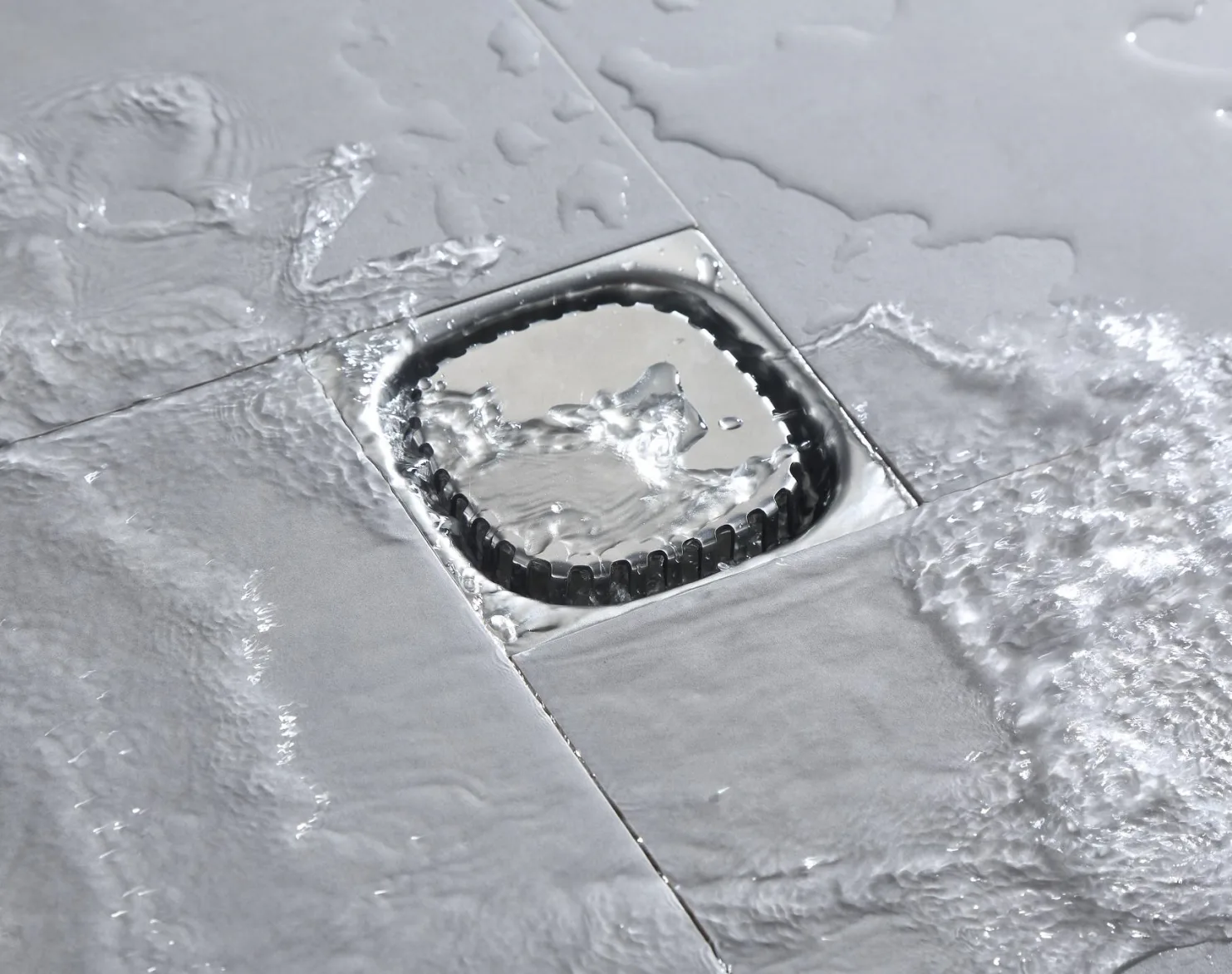
For an actual installation, check the outlet diameter, floor recess, waterproofing interface, grate size, tile height, pipe alignment, and access for future cleaning. A drain that performs well on a display stand may be restricted by a poorly aligned adaptor or downstream pipe.
CN110629859B as a design case study
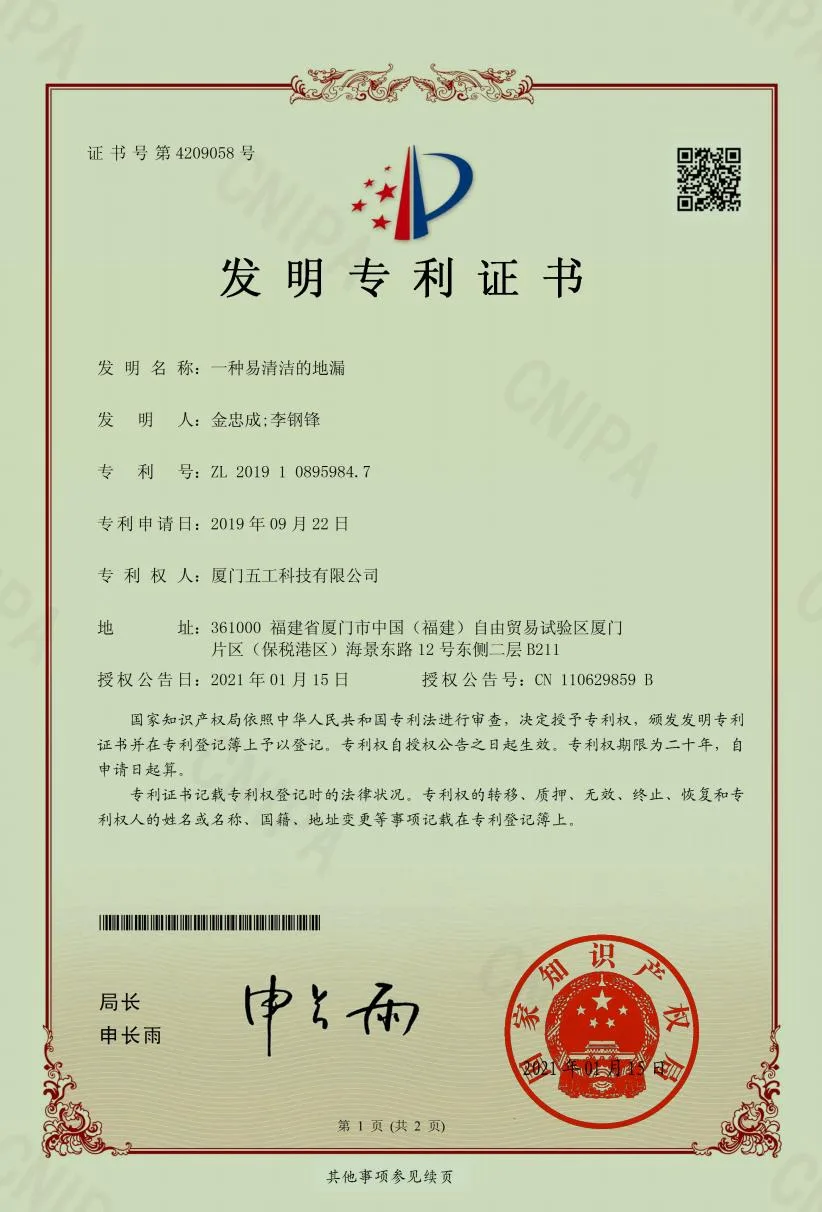
WUGONG's patent certificate identifies Chinese invention patent CN110629859B, titled “一种易清洁的地漏” (“an easy-clean floor drain”), with Xiamen Wugong Technology Co., Ltd. as the patent holder. The local certificate records an application date of September 22, 2019 and an authorization announcement date of January 15, 2021. The public record can be checked on Google Patents.
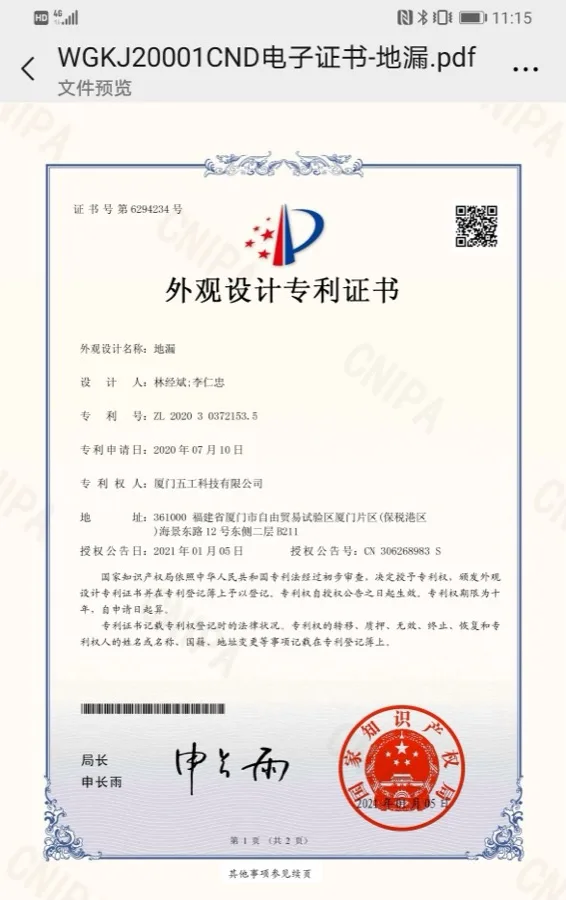
The patent publication supports discussion of the disclosed structure and its intended cleanability. It does not by itself prove flow capacity, odor-control duration, certification, commercial adoption, or suitability for every installation. Those claims need separate tests or approvals.
Installation dimensions and product fit
The correct dimension source is the product drawing or installation manual, not a photograph. Before specifying a floor drain, confirm:
- grate length and width;
- body depth and available floor build-up;
- outlet diameter and direction;
- waterproofing and sealing interface;
- tile and finished-floor height;
- compatibility with the local waste pipe;
- clearance required to remove and service the insert.
Do not scale dimensions from a rendering. Use the controlled drawing for the exact model and revision.
How to clean a removable floor drain
Follow the product instructions, but the general sequence is to lift the cover, remove the internal insert, clear hair and sediment, rinse accessible surfaces, inspect the sealing element, clean the seating area, and reinstall the parts in the correct direction. Confirm that the moving seal closes freely before replacing the cover.
Avoid tools or chemicals that scratch the finish, swell seals, corrode metal, or deform plastic. If odor persists after cleaning, inspect the downstream pipe, waterproofing, dry traps elsewhere, and ventilation rather than assuming the drain insert is the only possible source.
Frequently asked questions
Is a mechanical seal the same as a water trap?
No. A water trap uses retained water as the barrier. A mechanical seal uses a moving or flexible element. Some installations may combine methods.
Does an easy-clean drain never clog?
No. Removable access makes debris easier to remove, but hair, sediment, scale, and downstream pipe restrictions can still reduce flow.
How often should the insert be cleaned?
It depends on hair, soap, construction dust, water hardness, and usage. Clean it when flow slows or odor appears, and establish a routine interval for heavily used areas.
Does a patent prove anti-odor or drainage performance?
No. A patent discloses and protects defined subject matter. Performance needs separate test evidence under stated conditions.
Will the drain fit every waste pipe?
No. Outlet size, direction, body depth, floor build-up, waterproofing, and local plumbing requirements must be checked against the installation drawing.